

Communication is an important part of everyday life. It helps us express our thoughts, share our feelings, understand others and build meaningful relationships. However, some children and adults experience difficulties with speaking, pronunciation, language development or understanding conversations. These challenges can affect their confidence, education, social interactions and daily activities.
Speech therapy provides professional support to improve these communication abilities through structured exercises and personalised treatment approaches. Whether someone experiences delayed speech, stammering, unclear pronunciation or language difficulties, the right guidance can make a meaningful difference.
Choosing professional speech therapy in Chennai can help individuals develop better communication skills and express themselves more confidently in everyday situations.
What Is Speech Therapy?
Speech therapy is a specialised healthcare service that helps individuals improve their speech, language, voice and communication abilities. It is provided by qualified speech-language pathologists who assess communication difficulties and create suitable therapy plans.
Speech therapy focuses on more than just speaking clearly. It also helps individuals understand language, form sentences, improve listening skills and participate in conversations.
Some common areas addressed through speech therapy include:
- Speech sound and pronunciation difficulties
- Delayed speech and language development
- Stammering and fluency disorders
- Voice and vocal quality problems
- Difficulty understanding spoken language
- Social communication challenges
- Communication difficulties following neurological conditions
The therapy approach depends on the individual’s age, communication needs and assessment results.
How Speech Therapy Helps Improve Communication Skills
Speech therapy uses different techniques and activities to develop essential communication abilities. Regular practice helps individuals improve their speech and apply their skills in real-life situations.
1. Improves Speech Clarity and Pronunciation
Unclear pronunciation can make conversations difficult, particularly when individuals struggle to produce certain sounds or words correctly. Speech therapy helps identify these difficulties and improve sound production through guided exercises.
Therapists may use sound repetition, tongue and lip movement exercises and word-practice activities to improve pronunciation. Over time, these techniques can help individuals speak more clearly and become easier to understand.
2. Supports Speech and Language Development in Children
Children develop communication skills at different stages. Some may experience delays in speaking their first words, learning vocabulary or forming sentences.
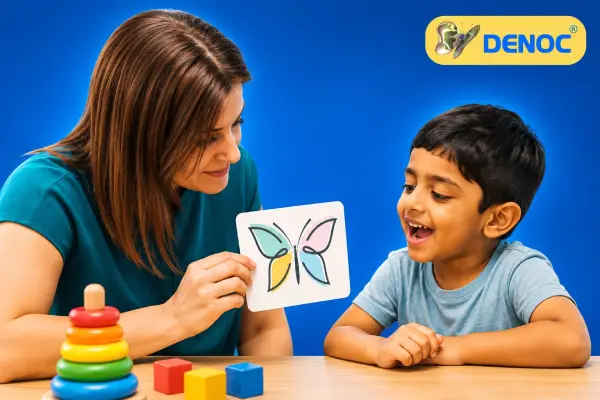
Speech therapy uses interactive activities to encourage language development. Picture recognition, storytelling, naming everyday objects and simple conversations help children understand and use language more effectively.
Early intervention can support children in developing communication skills needed for learning, social interaction and everyday activities.
3. Helps Manage Stammering and Fluency Disorders
Stammering affects the natural flow of speech. Individuals may repeat sounds, prolong words or experience interruptions while speaking.
Speech therapy helps individuals understand their speech patterns and practise techniques that support smoother communication. Breathing coordination, controlled speaking and speech pacing may be included in the therapy programme.
The focus is on developing comfortable and effective communication without creating unnecessary pressure.
4. Develops Listening and Language Understanding
Effective communication involves listening as well as speaking. Some individuals find it difficult to understand instructions, process spoken information or respond appropriately during conversations.
Speech therapy includes listening exercises, storytelling and question-and-answer activities to strengthen language comprehension.
These skills can help children understand classroom instructions and adults participate more confidently in personal and professional conversations.
5. Builds Social Communication Skills
Social communication helps individuals interact appropriately with others in different situations. Some people may struggle to start conversations, maintain discussions or understand social cues.
Speech therapy helps develop these abilities through structured communication activities.
Individuals can practise expressing thoughts, taking turns during conversations, understanding gestures and responding appropriately to others. These skills support better relationships and increased confidence in social environments.
6. Improves Voice Quality and Control
Voice difficulties such as hoarseness, vocal strain and unusual pitch can affect communication. Speech therapy may include breathing exercises, vocal techniques and guidance on healthy voice usage.
These activities help individuals develop better voice control and communicate more comfortably. Persistent voice changes may also require an evaluation by an appropriate medical professional.
7. Supports Communication After Stroke or Brain Injury
Certain neurological conditions, including stroke and brain injuries, can affect speech, language understanding and the ability to express thoughts.
Speech-language therapy can help individuals work on naming objects, forming sentences, understanding conversations and expressing everyday needs.
Treatment is personalised according to the individual’s communication abilities and recovery goals.
Why Hearing Assessment Is Important for Speech Development
Hearing and speech development are closely connected. Children learn to recognise sounds, understand words and develop spoken language by listening to people around them.
When hearing difficulties are present, individuals may struggle to recognise speech sounds or understand conversations clearly. This can affect communication development and everyday interactions.
If you are searching for audiology near me, consulting a qualified audiologist can help identify possible hearing concerns.
Audiology services may include hearing evaluations, hearing loss assessment, hearing aid recommendations and ongoing hearing care.
When necessary, audiologists and speech-language pathologists can work together to support individuals with hearing and communication difficulties.
Speech Therapy for Children and Adults
Speech therapy is beneficial for different age groups, although the treatment approach varies depending on individual requirements.
Speech Therapy for Children
Children may benefit from speech therapy when they experience delayed speech, unclear pronunciation or difficulty understanding and using language.
Therapy activities often include play-based learning, storytelling, picture identification and interactive conversations. These activities encourage children to develop vocabulary, sentence formation and social communication skills.
Speech Therapy for Adults
Adults may require speech therapy for stammering, voice difficulties, pronunciation concerns or communication problems following a stroke or neurological condition.
Therapy focuses on practical communication skills that support everyday conversations, workplace interactions and personal relationships.
When Should You Consider Speech Therapy?
Recognising communication difficulties early can help individuals receive appropriate professional support.
Children may benefit from an assessment if they show signs such as delayed speech, limited vocabulary, difficulty forming sentences or challenges following simple instructions.
Adults may consider professional support if they experience frequent speech interruptions, difficulty expressing thoughts, changes in voice quality or communication difficulties following a neurological condition.
These signs do not automatically indicate a communication disorder. A professional evaluation can help identify the underlying concerns and determine whether therapy is necessary.
What Happens During a Speech Therapy Session?
A speech therapy programme usually begins with an initial assessment to understand the individual’s communication strengths and difficulties.
Based on the findings, the therapist creates a personalized treatment plan with specific goals.
The process generally involves an initial evaluation, goal setting, guided therapy activities and regular progress monitoring. Parents or caregivers may also receive home-practice guidance, particularly when children are undergoing therapy.
Consistent practice and professional guidance help individuals gradually apply their communication skills in everyday situations.
How to Choose the Right Speech Therapy Centre in Chennai
Choosing the right therapy centre is an important step towards improving communication abilities. A suitable centre should understand individual requirements and provide professional guidance throughout the treatment process.
Consider the qualifications of speech-language pathologists, availability of personalised treatment plans, assessment facilities and regular progress monitoring.
Access to audiology services can also be beneficial when hearing difficulties may be affecting speech development.
Most importantly, choose a centre that provides a comfortable environment where children and adults can participate in therapy without feeling pressured.
Conclusion
Effective communication plays an important role in personal development, education, professional growth and social relationships. Speech difficulties should not prevent individuals from expressing their thoughts or participating confidently in everyday activities.
Speech therapy provides structured support to improve pronunciation, language development, listening, fluency, voice control and social communication. With personalised treatment and regular practice, individuals can work towards meaningful communication goals.
If you or your child experiences communication difficulties, consider seeking professional guidance. Explore reliable speech therapy in Chennai and audiology services to take the first step towards clearer communication and greater confidence.